Communication, Regulation & Independence — A whole child developmental intervention for autistic and neurodivergent learners from Pre K through High School

Your child is more than a behavior. More than a diagnosis. More than a difficult day. At Mosaic Minds, we see the child you see.
And we see the parent who lies awake at night wondering whether their child will ever be able to tell someone what they need, ask for help, make a friend, handle an unexpected change, or move through the world with greater independence. THRIVE was created for that child and for that family.
THRIVE is designed to strengthen the skills that support a fuller and more independent life, including communication, emotional and sensory regulation, relationships, self-advocacy, participation, flexibility, confidence, and independence.
THRIVE is Mosaic Minds Center’s individualized, relationship-based developmental intervention program for autistic and other neurodivergent learners.
Rather than using the same goals or strategies for every child, THRIVE begins by asking: Who is this learner? What are their strengths? What are they trying to communicate? What makes participation difficult? What supports make success more possible?
Each learner receives an individualized THRIVE Plan based on communication, regulation, relationships, participation, independence, family priorities, and meaningful needs in everyday life.
We Look Beneath the Behavior
THRIVE looks at both the learner and the environment around them. Visual supports, AAC, sensory supports, communication strategies, routines, pacing, movement, and environmental adjustments may all be used to make communication, regulation, participation, and independence more successful.
THRIVE is built around six interconnected pillars that together support the whole child.
Supporting emotional and sensory regulation, coping, flexibility, transitions, recovery after frustration, and the ability to recognize and communicate regulation needs.
THRIVE is designed to strengthen the abilities that allow children and adolescents to participate more successfully and independently in everyday life.
Expressing needs, choices, feelings, ideas, questions, and requests more clearly through speech, AAC, gestures, visuals, signs, or other meaningful forms of communication.
Recognizing overwhelm earlier, learning strategies that support regulation, recovering more successfully after frustration, and communicating when support is needed.
Building shared engagement, peer interaction, relationships, friendship skills, boundaries, and a stronger sense of belonging.
Learning to say no, ask for help, request a break, communicate preferences, request accommodations, and tell others what is needed to be successful.
Completing routines with less unnecessary adult prompting, beginning and finishing tasks, making choices, solving problems, and participating more independently at home, school, and in the community.
Developing the confidence and skills needed to participate more fully in learning, social activities, community experiences, and everyday routines.
Learning to manage changes, transitions, disappointment, frustration, and unexpected situations more successfully.
ABA therapy primarily uses behavioral principles to teach skills and change observable behavior. ABA may identify a behavior, examine what happens before and after that behavior, teach replacement skills, reinforce desired responses, and use data to measure changes in observable behavior.
For some children and families, ABA therapy may be an appropriate and beneficial intervention. THRIVE takes a different developmental approach. THRIVE looks beyond the behavior itself and considers the whole learner.
| ABA Therapy | THRIVE |
|---|---|
| Primarily focuses on behavioral principles, skill teaching, and observable behavior change. | Focuses on communication, emotional and sensory regulation, relationships, self advocacy, participation, flexibility, confidence, and independence. |
| Identifies a behavior and examines what happens before and after that behavior. | Also asks what the learner is trying to communicate, whether the learner is overwhelmed, and whether there is a sensory need. |
| Reinforces desired responses and uses data to measure changes in observable behavior. | Asks what adults or the environment can change to make successful participation more possible. |
THRIVE does not seek to eliminate harmless neurodivergent traits. We do not require forced eye contact. We do not make appearing less neurodivergent the goal. We do not view compliance alone as evidence of meaningful progress.
Some families may choose THRIVE as an alternative to ABA. Others may use THRIVE alongside ABA, speech therapy, occupational therapy, counseling, special education, or other appropriate services. The right approach depends on the individual learner and the goals of the family.
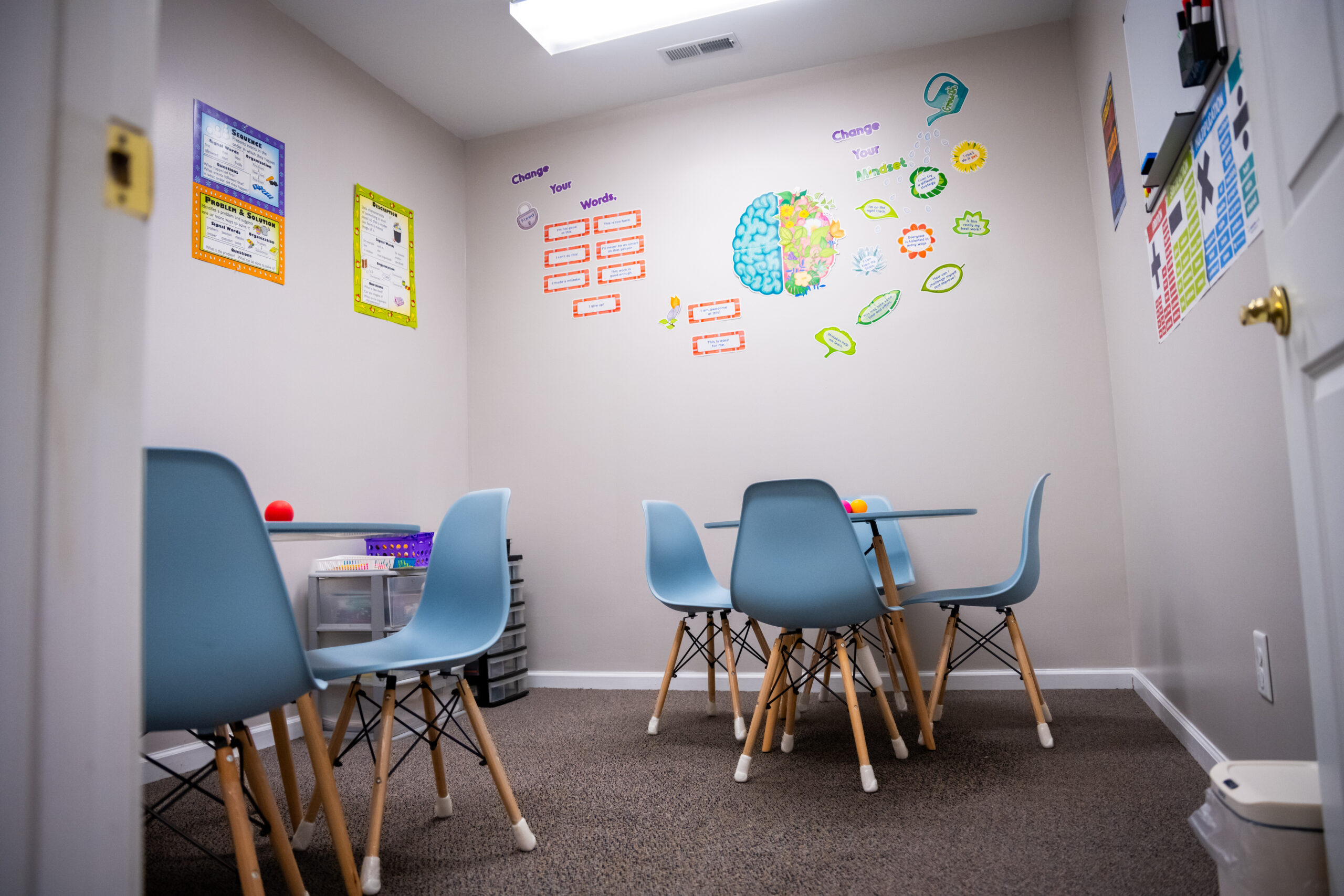
THRIVE is not simply sitting at a table completing tasks. Sessions are designed around meaningful interaction, communication, emotional and sensory regulation, movement, relationships, self advocacy, problem solving, and participation in everyday activities.
THRIVE does not place a learner into a predetermined program and expect the learner to adapt to it. We adapt the intervention to the learner.
The THRIVE process begins with understanding your child. We consider strengths, interests, communication, sensory needs, regulation, relationships, school experiences, independence, successful supports, and family priorities.
Each learner receives an individualized THRIVE Plan with approximately three to five priority goals. Goals are functional and meaningful. We are not simply asking whether the child can perform a skill during a session. We are asking whether the skill will improve communication, relationships, participation, safety, self advocacy, learning, or everyday independence.
Progress is monitored throughout intervention and formally reviewed approximately every twelve weeks so that goals and supports can grow and change with the learner.
Some learners benefit from focused one-to-one intervention. Other learners benefit from carefully matched small groups where they can practice communication, relationships, flexibility, self advocacy, turn taking, collaboration, regulation, and independence with peers. Small groups generally include three to six learners. Even within a group, each learner continues to work toward individualized THRIVE goals.
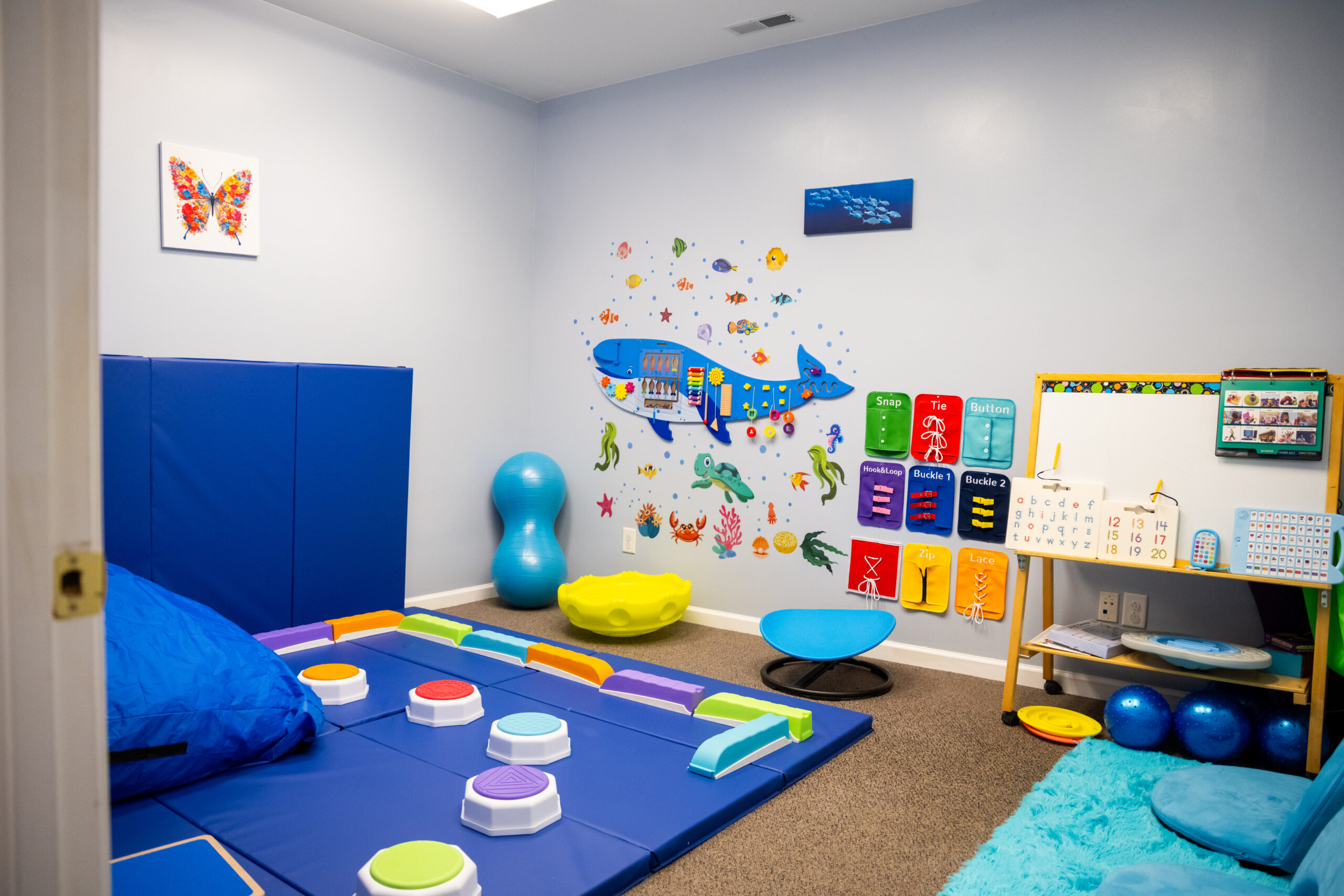
For some learners, the Mosaic Minds Sensory Oasis may become an important part of THRIVE. The Sensory Oasis is not simply a place to relax. Within THRIVE, sensory experiences may be used intentionally to strengthen regulation, communication, self awareness, choice making, engagement, and independence.
We do not assume that every sensory experience is regulating for every child. Instead, learners can begin discovering what helps their body feel ready, what makes them uncomfortable, and how to ask for more, less, quiet, movement, a break, or something different. Over time, the goal is for the learner to become increasingly able to recognize and communicate their own sensory and regulation needs.
Our Motor Mastery & Communication Studio gives learners opportunities to develop communication and developmental skills through movement and meaningful activity. Movement activities may support communication, motor planning, sequencing, problem solving, turn taking, peer collaboration, confidence, and independence. Movement becomes another natural opportunity to communicate, make choices, solve problems, regulate, cooperate, and become more independent.
Parents know their child in ways no professional ever can. That is why family partnership is an important part of THRIVE. Initial sessions may focus on developing trust, predictable routines, and a strong intervention relationship between the learner and Mosaic Minds staff. As appropriate, parents may participate through observation, coaching, progress reviews, strategy practice, and home carryover. Families receive practical strategies that can be incorporated into everyday routines.
THRIVE may be appropriate for autistic and other neurodivergent children and adolescents who need additional support with communication, regulation, relationships, participation, flexibility, self advocacy, or independence. Learners may include those with:
Imagine your child communicating what they need before frustration takes over.
Imagine realizing one day that something has changed. Your child is beginning to communicate what has always been inside. They are beginning to understand what their body needs. They are beginning to trust their own voice. They are beginning to connect. They are beginning to participate. They are beginning to do more for themselves.
And for a parent who has spent years wondering what their child needs, those moments are not small.
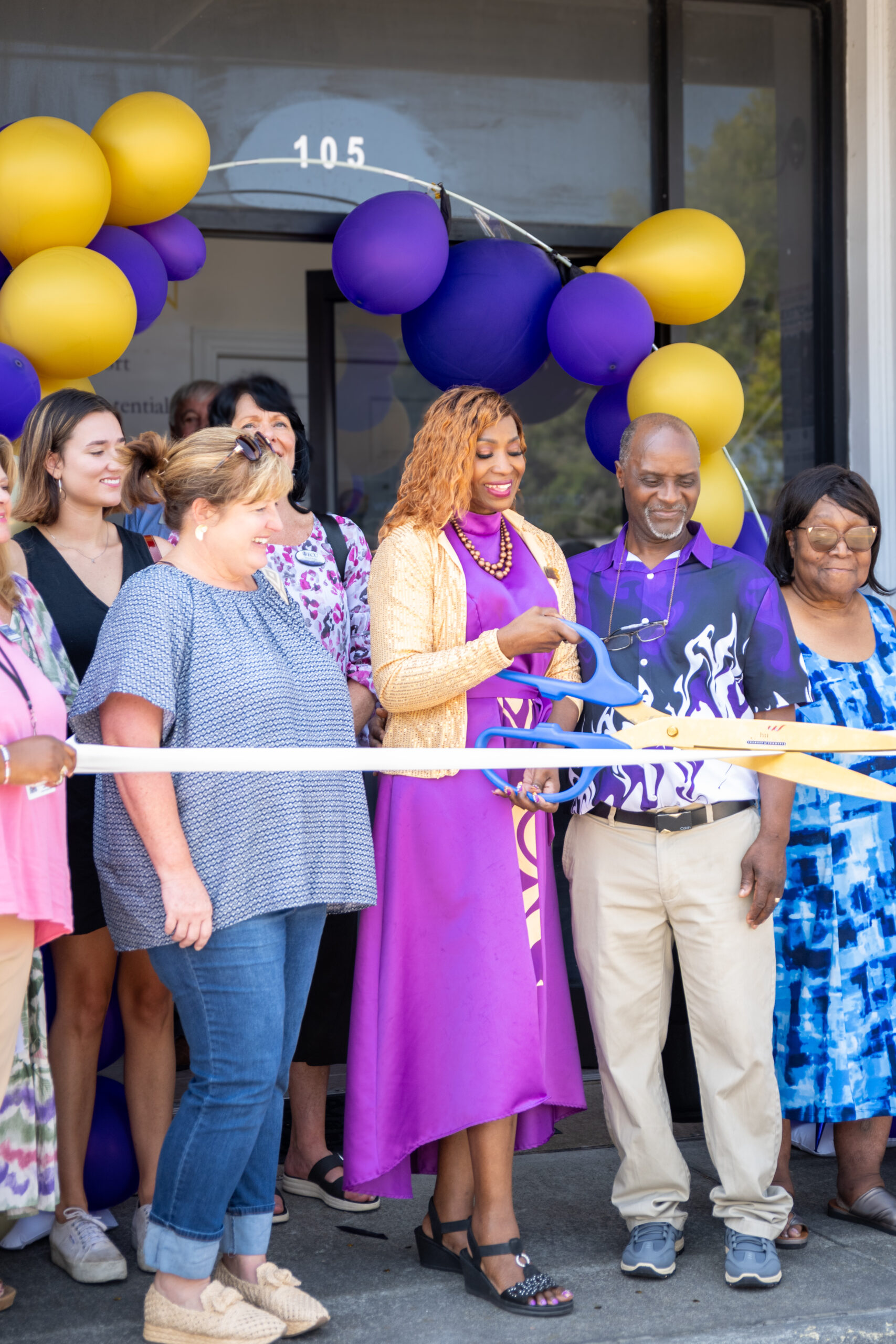
We are proud to open our doors to the community. Add your ribbon cutting photos below in Elementor.
THRIVE is a developmental intervention program provided by Mosaic Minds Center for Autism & Neurodivergent Learning. THRIVE is not ABA therapy and does not replace clinical services such as speech-language therapy, occupational therapy, psychological services, or medical care. Some families may use THRIVE alongside other services. The right combination of supports depends on the individual learner and the goals of the family.
THRIVE is a developmental intervention program provided by Mosaic Minds Center for Autism & Neurodivergent Learning. THRIVE is not ABA therapy and does not replace clinical services such as speech-language therapy, occupational therapy, psychological services, or medical care. Some families may use THRIVE alongside other services. The right combination of supports depends on the individual learner and the goals of the family.
| Service | Price | Action |
|---|---|---|
| THRIVE Family Consultation | Contact for Pricing | Contact Us |
| THRIVE Individualized Program | Contact for Pricing | Contact Us |